
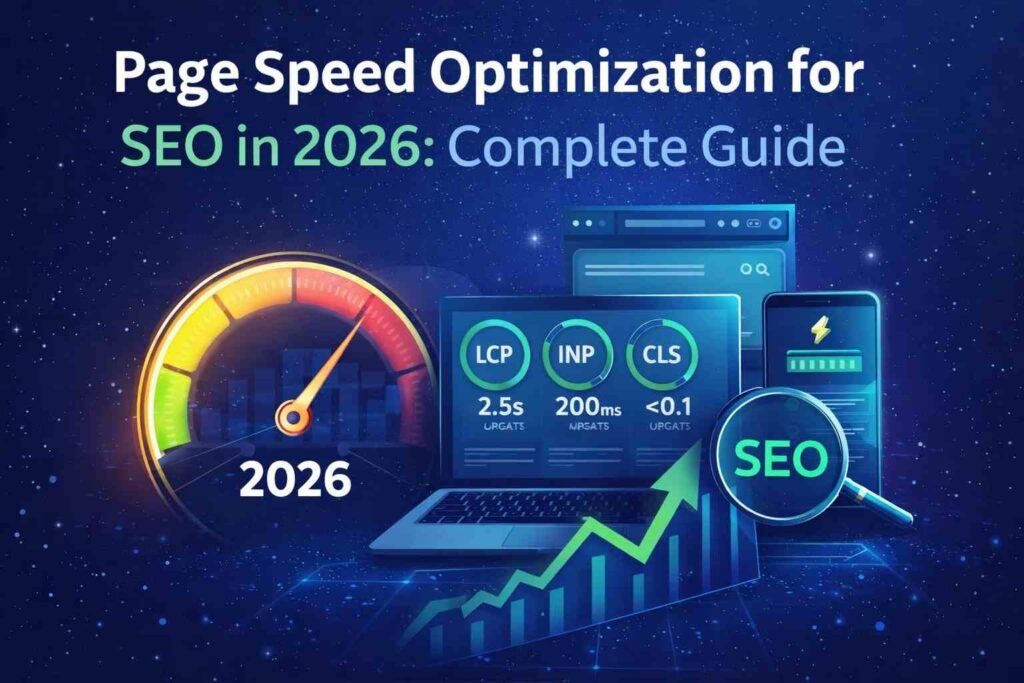
In 2026, SEO is no longer driven by keywords alone—it is driven by experience. One of the strongest indicators of a good experience is how fast a website loads and responds. Website speed has become a defining factor that influences how users interact with content and how search engines evaluate quality.
Search engines now reward websites that deliver information quickly, smoothly, and consistently across devices. A slow website, no matter how valuable its content may be, struggles to compete in search results. This makes website speed optimization one of the most impactful SEO strategies today.
How Website Speed Fits into Modern SEO
Search engines aim to serve results that users enjoy interacting with. When a page loads slowly, users often abandon it before engaging. These actions send negative signals back to search engines, reducing a site’s visibility.
In 2026, website speed affects SEO through:
- User engagement metrics
- Core Web Vitals performance
- Mobile usability
- Crawl efficiency
- Conversion behavior
Speed is no longer a backend concern—it directly shapes rankings.
Core Web Vitals: Measuring Real User Experience
Core Web Vitals remain a central part of Google’s ranking system. Unlike older performance indicators, these metrics are based on real user interactions rather than simulated tests.
The three key metrics include:
Largest Contentful Paint (LCP)
Measures how quickly the main content appears on the screen. A slow LCP often results from heavy images or slow servers.
Interaction to Next Paint (INP)
Measures how responsive a website feels when users click, scroll, or type. Long delays indicate excessive JavaScript execution.
Cumulative Layout Shift (CLS)
Tracks visual stability. Unexpected movement during loading frustrates users and reduces trust.
Strong scores across these metrics signal that a website delivers a smooth and reliable experience.
Why Slow Websites Lose Rankings Faster in 2026
User patience has decreased as technology has improved. In 2026, users expect websites to load almost instantly—especially on mobile devices.
Slow websites tend to experience:
- High bounce rates
- Lower session duration
- Fewer interactions
- Declining repeat visits
Search engines analyze these behaviors at scale. When users consistently abandon a page, it signals that the page is not meeting expectations, leading to lower rankings over time.
Mobile Speed: The Primary Ranking Reference
With mobile-first indexing fully mature, search engines now judge websites mainly by their mobile performance. Even a fast desktop site can suffer SEO losses if the mobile version is slow or poorly optimized.
Mobile speed optimization matters because:
- Mobile users dominate search traffic
- Mobile networks vary in quality
- Slow mobile pages hurt engagement faster
Optimizing for mobile performance is essential for maintaining competitive rankings.
The Relationship Between Speed and Crawl Budget
Search engines allocate a limited amount of crawling resources to each website. When pages load slowly, search bots spend more time retrieving content, which reduces the number of pages they can crawl.
Optimized website speed helps:
- Increase crawl frequency
- Improve indexing speed
- Ensure fresh content appears faster in search results
For large blogs and content-heavy websites, this can significantly impact overall SEO growth.
Website Speed and Conversion Performance
SEO does not exist in isolation. Website speed also plays a crucial role in conversion rate optimization.
Faster websites typically see:
- Higher form completion rates
- Increased product sales
- Better trust and credibility
- Lower abandonment rates
In 2026, performance optimization connects SEO and business outcomes more closely than ever before.
Common Speed Issues That Hurt SEO
Many websites continue to struggle with performance due to avoidable problems, including:
- Oversized and uncompressed images
- Too many third-party scripts
- Render-blocking CSS and JavaScript
- Poor hosting infrastructure
- Lack of caching strategies
Identifying and resolving these issues is critical for maintaining search visibility.
Effective Speed Optimization Techniques for 2026
To improve website speed and SEO performance, focus on these proven strategies:
- Use modern image formats and responsive images
- Reduce unnecessary JavaScript execution
- Defer non-essential scripts
- Improve server response times
- Enable browser caching
- Use a Content Delivery Network (CDN)
- Implement lazy loading for media
Performance optimization should be an ongoing process, supported by regular monitoring and updates.
Tools to Monitor Website Speed
Tracking performance helps maintain long-term SEO success. Reliable tools include:
- Google PageSpeed Insights
- Lighthouse
- Chrome User Experience Report
- GTmetrix
- WebPageTest
These tools provide actionable insights into both technical issues and user experience data.
Conclusion
In 2026, website speed is a defining factor in SEO success. Search engines prioritize fast, responsive, and stable websites because they deliver better user experiences. From Core Web Vitals and mobile usability to crawl efficiency and conversions, website speed influences nearly every aspect of search performance.
Websites that consistently invest in performance optimization gain stronger rankings, higher engagement, and better business results. Those that ignore speed risk falling behind in an increasingly experience-driven search environment.
Frequently Asked Questions (FAQs)
1. How does website speed influence search engine rankings?
Website speed affects how users interact with a page. Faster websites encourage longer visits and lower bounce rates, which search engines interpret as positive experience signals and reward with better rankings.
2. Is page speed optimization only important for large websites?
No. Page speed optimization is important for websites of all sizes. Even small blogs and business websites benefit from faster load times through improved visibility, engagement, and crawl efficiency.
3. Can improving page speed increase organic traffic?
Yes. Faster websites tend to rank higher and retain users longer, which can lead to increased organic traffic over time.
4. How often should website speed be monitored?
Website speed should be reviewed regularly, especially after publishing new content, installing plugins, or making design changes. Monthly performance checks are recommended.
5. Does website speed affect voice search and AI-driven results?
Yes. Fast-loading pages are more likely to be selected for voice search answers and AI-generated search results.
6. Is hosting quality important for page speed optimization?
Absolutely. High-quality hosting improves server response time and supports better SEO performance.
7. Can slow third-party scripts impact SEO performance?
Yes. Excessive ads, tracking tools, and external scripts can slow down pages and reduce Core Web Vitals scores.
8. Does page speed optimization improve user trust?
Yes. Fast websites feel more reliable and professional, increasing user confidence.
9. How long does it take to see SEO improvements after speed optimization?
SEO improvements typically appear within a few weeks to a few months, depending on competition.
10. Is page speed more important than content quality?
Both matter. High-quality content attracts users, while fast speed ensures they stay and engage.