
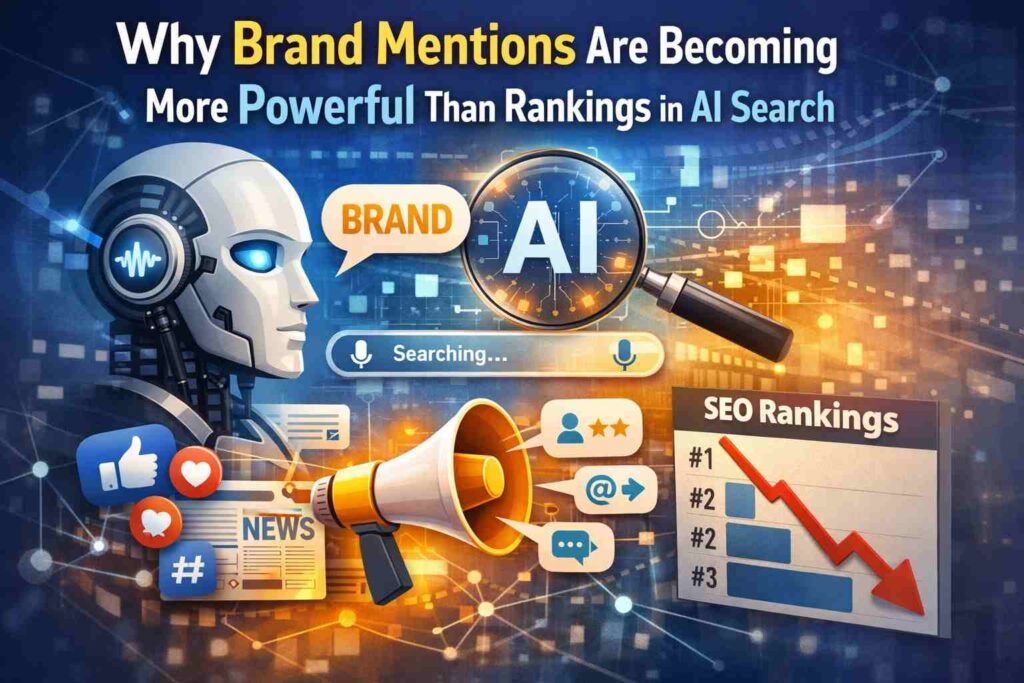
Search visibility is no longer defined only by who ranks first on a results page. With the rapid rise of AI-driven search experiences, the way information is discovered, summarized, and trusted has changed dramatically. Today, brand mentions play a more influential role than traditional rankings, especially in AI-generated answers where users may never see a list of links at all.
This shift marks a new phase in search evolution—one where authority, recognition, and credibility outweigh pure keyword positioning.
The End of Ranking-Centric Visibility
Traditional SEO focused heavily on ranking individual pages for specific keywords. Success depended on backlinks, keyword placement, and technical optimization. While these factors still matter, AI search systems work differently.
Instead of presenting ten blue links, AI search:
- Understands user intent
- Pulls information from multiple sources
- Generates a single, consolidated answer
In this environment, users often get what they need instantly. As a result, the brands referenced within those answers gain visibility, even when their pages aren’t clicked or ranked at the top.
How AI Search Interprets Brand Mentions
AI search systems evaluate trust at a broader level than traditional algorithms. Rather than assessing only page-level signals, they look at patterns across the web.
Brand mentions help AI systems determine:
- Which brands are commonly associated with a topic
- Which names appear in expert discussions
- Which brands are consistently referenced across reliable sources
When a brand appears repeatedly in relevant, credible contexts, AI systems begin to recognize it as an authoritative entity. Over time, this recognition influences whether the brand is surfaced in AI-generated explanations, comparisons, or recommendations.
Why Rankings Alone No Longer Guarantee Influence
A top ranking doesn’t always translate to visibility anymore. Many informational searches are answered directly by AI, reducing the need for users to scroll or click.
This creates a new reality:
- Pages may rank but receive fewer clicks
- AI answers satisfy user intent instantly
- Influence happens without traffic
In contrast, brand mentions influence perception. Even if users don’t visit a website, seeing a brand referenced repeatedly builds familiarity and trust.
Brand Mentions Strengthen Entity Authority
AI search relies heavily on entity-based understanding. Brands are treated as entities connected to topics, products, and solutions.
Brand mentions reinforce this entity recognition by:
- Clarifying what a brand is known for
- Associating it with specific expertise
- Strengthening contextual relevance
Once a brand is clearly defined as an entity, AI systems can reference it naturally—even for searches that don’t include the brand name.
Trust Is the Core Currency of AI Search
AI search aims to deliver accurate and reliable information. To do this, it prioritizes sources and brands that demonstrate consistency and credibility.
Brand mentions act as trust signals because they show:
- Industry recognition
- Relevance across multiple platforms
- Long-term presence within a topic
This trust compounds over time. A brand that is mentioned consistently becomes easier for AI systems to recommend, explain, or cite.
Zero-Click Visibility Still Creates Value
One of the biggest misconceptions about AI search is that fewer clicks mean less impact. In reality, visibility without clicks still drives value.
Brand mentions in AI answers:
- Increase brand recall
- Influence user decisions
- Encourage future branded searches
Users may not click immediately, but they remember names they see repeatedly. Over time, this recognition translates into trust, preference, and conversions.
How Brand Mentions Shape Faster Decisions
AI search shortens the decision-making process. When users see familiar or frequently referenced brands in AI-generated responses, they are more likely to trust them quickly.
This means brand mentions act as decision accelerators, helping users move from research to action with less friction.
Building Brand Mentions in an AI-First Search World
To remain visible, brands must think beyond rankings and backlinks.
Effective strategies include:
- Creating expert-led, authoritative content
- Being cited in industry guides, comparisons, and FAQs
- Participating in PR, podcasts, and thought leadership
- Maintaining consistent messaging across platforms
- Building topical authority rather than isolated pages
The goal is to be recognizable and referable, not just rankable.
Rankings Still Matter—But They’re Only One Piece
Traditional SEO is not obsolete. Rankings still support discovery, especially for commercial and in-depth queries. However, they are no longer sufficient on their own.
In AI search, success comes from combining:
- Solid SEO foundations
- Strong brand mentions
- Authority and trust signals
- Clear entity positioning
Brands that ignore this shift risk being invisible—even if their pages technically rank.
Frequently Asked Questions (FAQs)
1. What is a brand mention in AI search?
A brand mention is any reference to a brand across digital platforms that AI systems recognize as a signal of authority and relevance.
2. Can AI search mention a brand without ranking it first?
Yes. AI systems may reference brands based on trust and consistency, even if the brand’s pages don’t rank at the top.
3. Are backlinks less important than brand mentions?
Backlinks still matter, but contextual brand mentions and credibility now carry more weight in AI-driven search.
4. Why do brand mentions matter for zero-click searches?
They influence user perception and trust even when users don’t visit a website directly.
5. How can smaller brands compete with larger ones?
By focusing on niche expertise, high-quality content, and consistent presence within a specific topic area.
Final Takeaway
The definition of visibility has been altered by AI search. Rankings alone no longer define success. In a world where answers are generated instantly, brands that are recognized, trusted, and frequently mentioned gain the greatest influence.
For businesses looking to stay relevant, the future of search lies in building authority—not just chasing positions.