
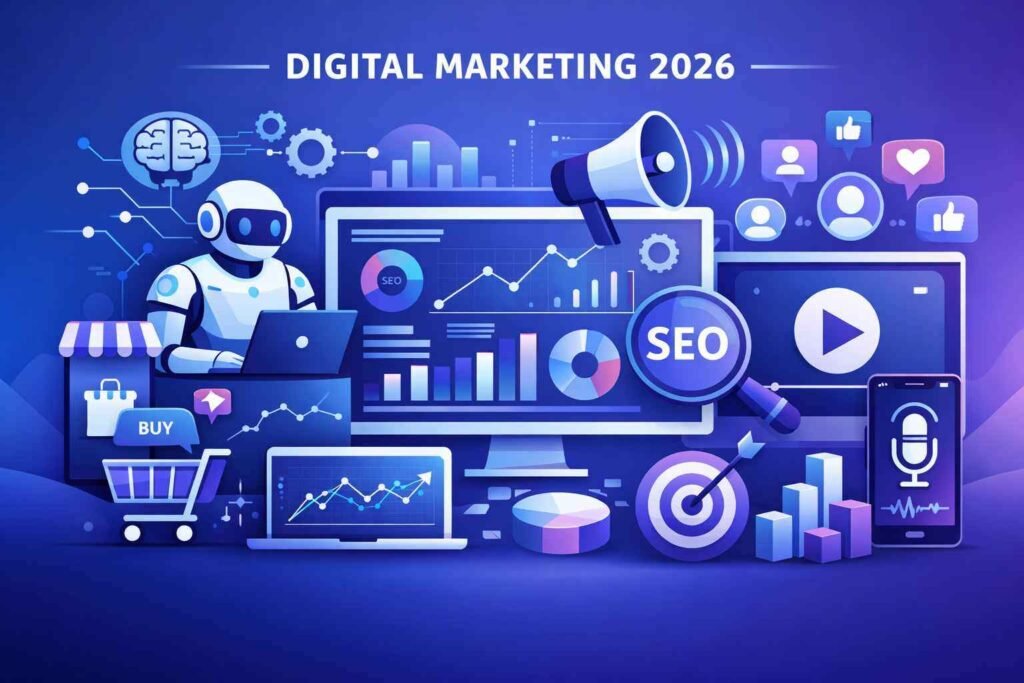
Digital marketing in 2026 is entering a smarter, faster, and more customer-centric phase. The combination of artificial intelligence, changing search behavior, privacy regulations, and evolving consumer expectations is reshaping how brands connect with audiences online. Traditional tactics alone are no longer enough — success now depends on adaptability, experience, and trust.
This article breaks down the most effective digital marketing strategies for 2026 and explains how businesses can build sustainable growth in an AI-driven ecosystem.
Why Digital Marketing Looks Different in 2026
Modern consumers don’t follow a straight path to purchase. They research through Google, social media, videos, voice assistants, reviews, and AI tools before making decisions. Search engines and platforms now reward brands that deliver relevance, value, and seamless experiences — not just keywords or paid reach.
To stay competitive in 2026, marketers must align technology with human understanding and long-term brand credibility.
1. AI as a Strategic Marketing Partner
Artificial intelligence is no longer optional — it’s embedded across every stage of marketing.
In 2026, AI helps marketers:
- Analyze customer behavior patterns
- Predict demand and intent
- Automate campaign optimization
- Improve targeting accuracy
- Generate performance insights in real time
Smart brands use AI to enhance decisions, not replace human creativity. Strategy, storytelling, and ethics still require human judgment.
Marketing impact: Faster execution, reduced costs, and higher campaign efficiency.
2. Search Experience Optimization (SXO) Takes Priority
SEO in 2026 is no longer just about ranking — it’s about delivering the best possible search experience.
Search engines now focus on:
- User intent satisfaction
- Page speed and usability
- Content credibility and depth
- AI-generated answers and zero-click results
- Trust signals and brand authority
How to adapt:
- Create content that directly solves user problems
- Optimize for long-tail and conversational queries
- Improve Core Web Vitals
- Build topical authority instead of isolated pages
Result: Better rankings, higher engagement, and long-term organic visibility.
3. Authority-Driven Content Marketing
Content saturation has made generic blogs ineffective. In 2026, only authoritative and experience-based content performs well.
High-impact content formats include:
- Detailed guides and evergreen resources
- Real business case studies
- Expert opinions and industry insights
- Original data, research, and comparisons
Brands that consistently publish trustworthy content build stronger relationships with both users and search engines.
Key shift: From “content volume” to “content value.”
4. Video Marketing Becomes the Primary Channel
Video is the most consumed content format in 2026 and plays a major role in search visibility and brand recall.
Top video strategies include:
- Short-form videos for discovery and engagement
- Educational YouTube content for authority
- Live videos for trust and interaction
- Personalized video ads powered by AI
Why it works: Videos increase time on site, improve conversions, and strengthen emotional connection with audiences.
5. Voice Search and Conversational Marketing Growth
With the rise of smart devices and AI assistants, voice and conversational search are shaping content strategies.
To optimize for voice search:
- Use natural, question-based keywords
- Write clear and direct answers
- Add FAQ sections and structured data
- Strengthen local SEO visibility
Brands that sound natural and helpful will dominate voice-based results.
6. Social Media as a Sales & Community Platform
Social media platforms in 2026 are no longer just for engagement — they are complete sales ecosystems.
Key developments include:
- In-app shopping experiences
- Influencer-led brand communities
- User-generated content driving trust
- AI-powered audience targeting
Winning approach: Focus on conversations, loyalty, and community instead of follower count.
7. Hyper-Personalized Messaging Through Email & WhatsApp
Generic campaigns no longer work. Personalization is the standard in 2026.
Successful brands personalize:
- Subject lines and messaging
- Timing based on behavior
- Content blocks by user interest
- Automated journeys via WhatsApp and email
Outcome: Higher open rates, better engagement, and improved ROI.
8. First-Party Data & Privacy-Focused Marketing
With third-party cookies fading, first-party data has become a critical asset.
Brands are investing in:
- Consent-based data collection
- CRM and customer data platforms (CDPs)
- Transparent privacy policies
- Value-driven lead generation
Trust equals growth in the digital economy of 2026.
9. Authentic Influencer Marketing
Influencer marketing is evolving toward quality over quantity.
In 2026, brands prefer:
- Micro and niche influencers
- Long-term collaborations
- Authentic storytelling
- Community-driven influence
These partnerships deliver higher engagement and stronger brand trust compared to celebrity endorsements.
10. Performance Marketing Powered by Advanced Analytics
Marketing decisions in 2026 rely heavily on data intelligence.
Advanced analytics help track:
- Customer lifetime value
- Cross-channel attribution
- Conversion journeys
- Predictive campaign outcomes
Tools like GA4, AI dashboards, and CRM analytics allow brands to measure what truly matters — profitability and growth.
Key Takeaways for Digital Marketing Success in 2026
- AI enhances marketing strategy, not creativity
- SEO is now experience-focused, not keyword-focused
- Authority and trust drive content performance
- Video and conversational formats dominate attention
- Personalization and privacy must coexist
- Data-driven decisions lead to scalable growth
Brands that adapt early to these changes will gain a significant competitive advantage.
Frequently Asked Questions (FAQs)
1. What is the biggest digital marketing trend in 2026?
AI-powered personalization combined with experience-focused SEO is the biggest trend.
2. Can small businesses compete in digital marketing in 2026?
Yes. With smart targeting, niche content, and automation tools, small businesses can compete effectively.
3. Is paid advertising still effective in 2026?
Yes, but only when supported by strong data, personalization, and optimized landing experiences.
4. How important is trust in digital marketing today?
Trust is critical. Transparency, privacy, and authenticity directly influence conversions and loyalty.
5. Which skills should digital marketers learn for 2026?
AI marketing, analytics, SEO strategy, video creation, and content authority building.